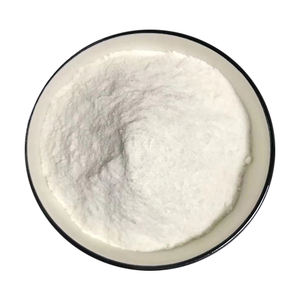
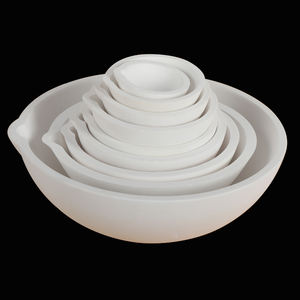
Researchers have found that boron nitride ceramic can work as a template for growing silicon carbide through chemical vapor deposition. This discovery opens new paths for making high-performance materials used in electronics and aerospace. The team tested hexagonal boron nitride because it stays stable at very high temperatures and does not react easily with other substances. These traits make it a strong candidate for supporting the growth of silicon carbide films.

(Can Boron Nitride Ceramic Be Used as a Template for Chemical Vapor Deposition of Silicon Carbide)
In the experiments, scientists placed boron nitride substrates inside a chemical vapor deposition chamber. They introduced gases containing silicon and carbon. When heated, these gases broke down and formed a thin layer of silicon carbide on the boron nitride surface. The resulting film showed good crystal structure and uniform thickness. This suggests the boron nitride surface guides the silicon carbide to grow in an orderly way.
Silicon carbide is valued for its hardness, thermal conductivity, and ability to handle high voltages. It is used in power devices, sensors, and extreme-environment applications. But growing high-quality silicon carbide films has been hard due to a lack of suitable base materials. Common substrates often cause defects or strain in the final product. Boron nitride may solve this problem because its atomic layout closely matches that of silicon carbide.

(Can Boron Nitride Ceramic Be Used as a Template for Chemical Vapor Deposition of Silicon Carbide)
The research team noted that using boron nitride reduces unwanted reactions during the deposition process. It also helps control the orientation of the silicon carbide crystals. These improvements could lead to better device performance and longer lifespans. Industry partners are now looking at how to scale up the method for commercial use. Further tests will focus on refining the process and checking long-term stability.